Criminal Justice Reform or Simply Equity?
Criminal Justice Reform or Simply Equity?
Imagine being born in the Unites States, commonly referred to as the land of the free, and being advised that the color of your skin increases the probability that you will spend the rest of your life in prison? This is an unfortunate conversation that occurs in many minority family households across the United States. Minority cultures, specifically Black or African American men, within the United States are nationally incarcerated at a significantly higher rate than any other race (Prison Policy Initiative, 2023). Representing a need for criminal justice reform at a national level within the United States.

Criminal Justice Inequities as a Sociological, Ethical, Economic, and Political Science Issue
Racial disparities within the federal criminal justice system may be viewed as a sociological, ethical, economic, and political science issue. Race, specifically within the criminal justice system is a social construct (University of Minnesota, 2016). Race is often identified by one’s perception and therefore identified racial disparities and inequitable treatment of individuals based on characteristics, demonstrated within the federal criminal justice system, is an ethical dilemma (University of Minnesota, 2016). The racial disparities identified within the federal criminal justice system has contributed to established wealth or economic inequalities within the United States extending generationally (Preston et al., 2022). Federal criminal charges and convictions directly impact one’s ability to obtain employment within the United States (Preston et al., 2022). Inequalities can also be viewed within law enforcement interactions and criminal sentencing of racial minorities and specifically African American or Black individuals demonstrating a lack of implemented laws and procedures to ensure equitable treatment within the federal criminal justice system (The Sentencing Project, 2022). This directly supports the identified inequitable treatment of African American or Black individuals within the federal criminal justice system within the United States and demonstrates a direct need for criminal justice reform.
Incarceration Rates
According to the Federal Bureau of Prisons, on February 25th, 2023, there were 60,656 Black or African American individuals which comprised of 38.5% of all inmates incarcerated within federal prisons in the United States (Federal Bureau of Prisons, 2023). Meanwhile, there were 90,606 Caucasian individuals which comprised of 57.5% of all inmates incarcerated within federal prisons in the United States (Federal Bureau of Prisons, 2023). These statics imply that African American individuals experience mass incarceration rates at a lower rate compared to Caucasian Americans without the consideration that Black or African American individuals comprise of only approximately 13.6% of the total population; comparatively, Caucasian Americans comprise of approximately 75.8% of the total population within the United States (U.S. Census Bureau, 2023). The estimated incarceration rates for African American or Black individuals are 2,306 individuals per every 100,000 individuals compared to 450 individuals per every 100,000 Caucasian Americans within the United States (Prison Policy Initiative, 2023). Therefore, African American, or Black individuals within the United States are approximately five times more likely to be incarcerated within federal prisons (Nellis, 2022). This demonstrates inequitable mass incarceration rates for African American or Black individuals and that they are incarcerated at a significantly higher rate compared to Caucasian Americans. Therefore, this supports a need for criminal justice reform.

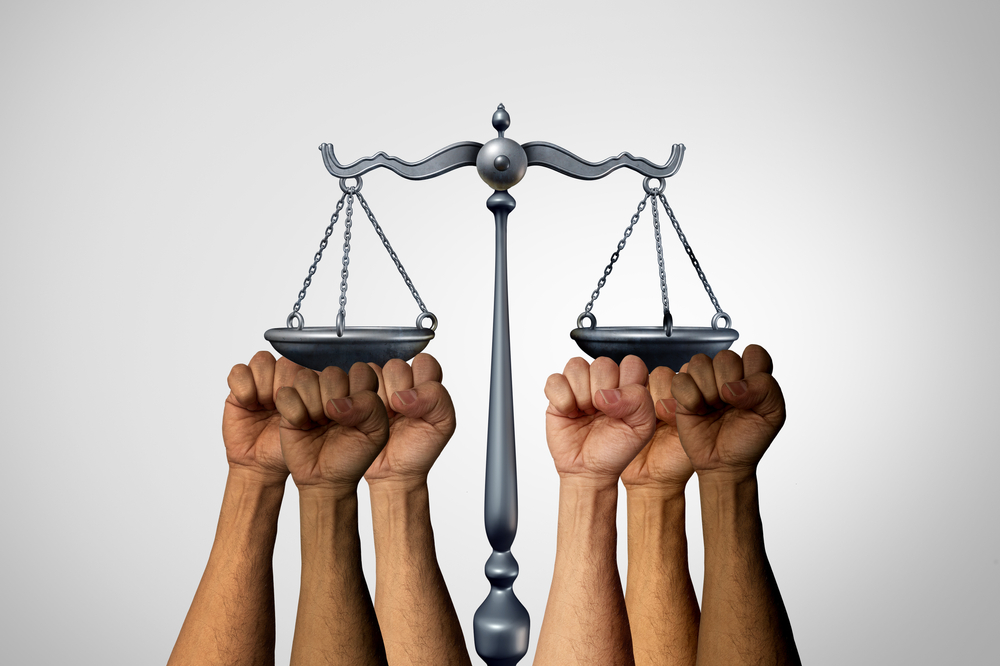
Ending federal mass incarceration rates for African American or Black individuals within America can be achieved through criminal justice reform. This may include the implementing policies that require regular reviews of federal criminal cases examining opportunities for parole or reduced sentencing when appropriate while capitalizing on service opportunities that have been demonstrated to be effective in supporting reintegration addressing the political science perspective (Waldman et al., 2019). This may also be achieved through the implementation of a social justice program that researches the criminal cases of those currently serving lengthy prison sentences for non-violent possession offenses for lower level drugs, as these types of offenders comprise the largest single demographic of criminals currently in prison or jail (Urban Institute, 2015). This could include inmates who are currently serving decade-long sentences for the possession of a large amount of marijuana, a substance that has since been fully legalized and regulated in many parts of the country. As African-American individuals have historically been unfairly targeted by law enforcement even for low-level non-violent drug crimes, implementation of these policies would help bridge the seemingly large racial gap which would promote inclusion and equality for African-American individuals and overall criminal justice reform.
Conclusion
The inequitable treatment of minority cultures and therefore mass incarceration rates have been demonstrated throughout history. Federal criminal justice reform is essential to ending inequities within society. Pardons, clemencies, and the promotion of civic engagement has been demonstrated as effective strategies to support equitable reintegration into society and therefore an equal and fair justice system.
References
Federal Bureau of Prisons. BOP Statistics: Inmate Race. (2023, February 23). https://www.bop.gov/about/statistics/statistics_inmate_race.jsp
Nellis, A. (2022, December 16). The color of justice: Racial and ethnic disparity in state prisons. The Sentencing Project. https://www.sentencingproject.org/reports/the-color-of-justice-racial-and-ethnic-disparity-in-state-prisons-the-sentencing-project/
Preston, A., Hassel, J., Medina, C., Eisenberg, R., & Roberts, L. (2022, November 3). America's broken criminal legal system contributes to wealth inequality. Center for American Progress. https://www.americanprogress.org/article/americas-broken-criminal-legal-system-contributes-to-wealth-inequality/
Prison Policy Initiative. (2023, March 3). Race and ethnicity. https://www.prisonpolicy.org/research/race_and_ethnicity/
Report to the United Nations on racial disparities in the U.S. criminal justice system. The Sentencing Project. (2022, November 2). https://www.sentencingproject.org/reports/report-to-the-united-nations-on-racial-disparities-in-the-u-s-criminal-justice-system/
University of Minnesota (2016, April 8). 10.2 the meaning of race and ethnicity. University of Minnesota Libraries Publishing. https://open.lib.umn.edu/sociology/chapter/10-2-the-meaning-of-race-and-ethnicity/
U.S. Census Bureau. (2023). U.S. Census Bureau quickfacts: United States. https://www.census.gov/quickfacts/fact/table/US/RHI225221
Urban Institute. (2015, October). How to reduce the federal prison population. Urban Institute. https://apps.urban.org/features/reducing-federal-mass-incarceration/
Waldman, M., Onyekwere, A., Chettiar, I. M., & Raghavan, P. (2019, May 16). Ending mass incarceration: Ideas from today's leaders. Brennan Center for Justice. https://www.brennancenter.org/our-work/policy-solutions/ending-mass-incarceration-ideas-todays-leaders
Comments
Post a Comment